
Depression is often misdiagnosed in neurodivergent adults, because Autistic or ADHD burnout looks a lot like depression: low motivation, exhaustion, emotional withdrawal, difficulty with daily tasks, and a general sense of hopelessness. When the differences are not recognised, it increases suffering, confusion and shame. The paths to recovery for depression and neuro-divergent burnout are very different.
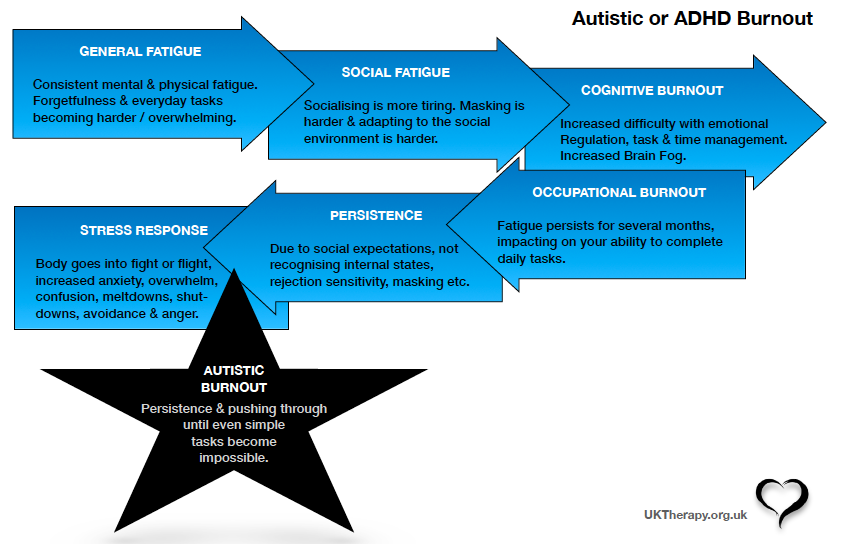
Depression is a mental health condition that involves persistent low mood, loss of interest in previously enjoyable activities, trouble sleeping, loss of appetite, and an overriding sense of sadness or emptiness, and it affects all neurotypes!
Depression is an internal state, often feeling disconnected from external events. You may have supportive relationships and enjoy your work, yet still feel a persistent emotional numbness or despair. It is often described as flatness or a black dog, something that overtakes your world regardless of what is happening around you.
Neurodivergent Burnout is contextual, building over time in response to prolonged social pressure, unmet needs, lack of accommodations, & the emotional strains of meeting everyday expectations.
Neurodivergent Burnout is not a mood disorder; it’s a survival response to living in a world that demands more than we can give. While depression comes with a numbness & inability to feel joy, burnout feels emotionally raw, dysregulated, or over-stimulated. People experiencing burnout may still feel joy when they can unmask and engage in special interests, or when they can rest without judgment. So, joy is there, it’s just not inaccessible under the weight of pressure & exhaustion.
Neurodivergent Burnout is not always recognised, and being told to engage more, to push through, or work harder often makes things worse. What is needed is rest, reduced demands, sensory regulation, and the ability to be in spaces where unmasking is safe. Rather than medication, we need sensory rest, identity validation, and less cognitive load. Rather than adjusting faulty thinking (CBT), we need the environment to change (reasonable adjustments).
Healing from depression is solitary, focused on fixing internal deficiencies. But when burnout is recognised, healing becomes social: Working with others who understand, reducing masking, stimming, managing energy, and making lifestyle changes that honour the neurodivergent nervous system.
Recovery becomes possible not through pushing harder, but through deeper alignment with one’s needs and identity.
Some neurodivergent people become suicidal not because they’re depressed, but because they’re forced to live in a world that denies their needs. Others drop out of school, leave jobs, or isolate themselves to protect an overstimulated system.